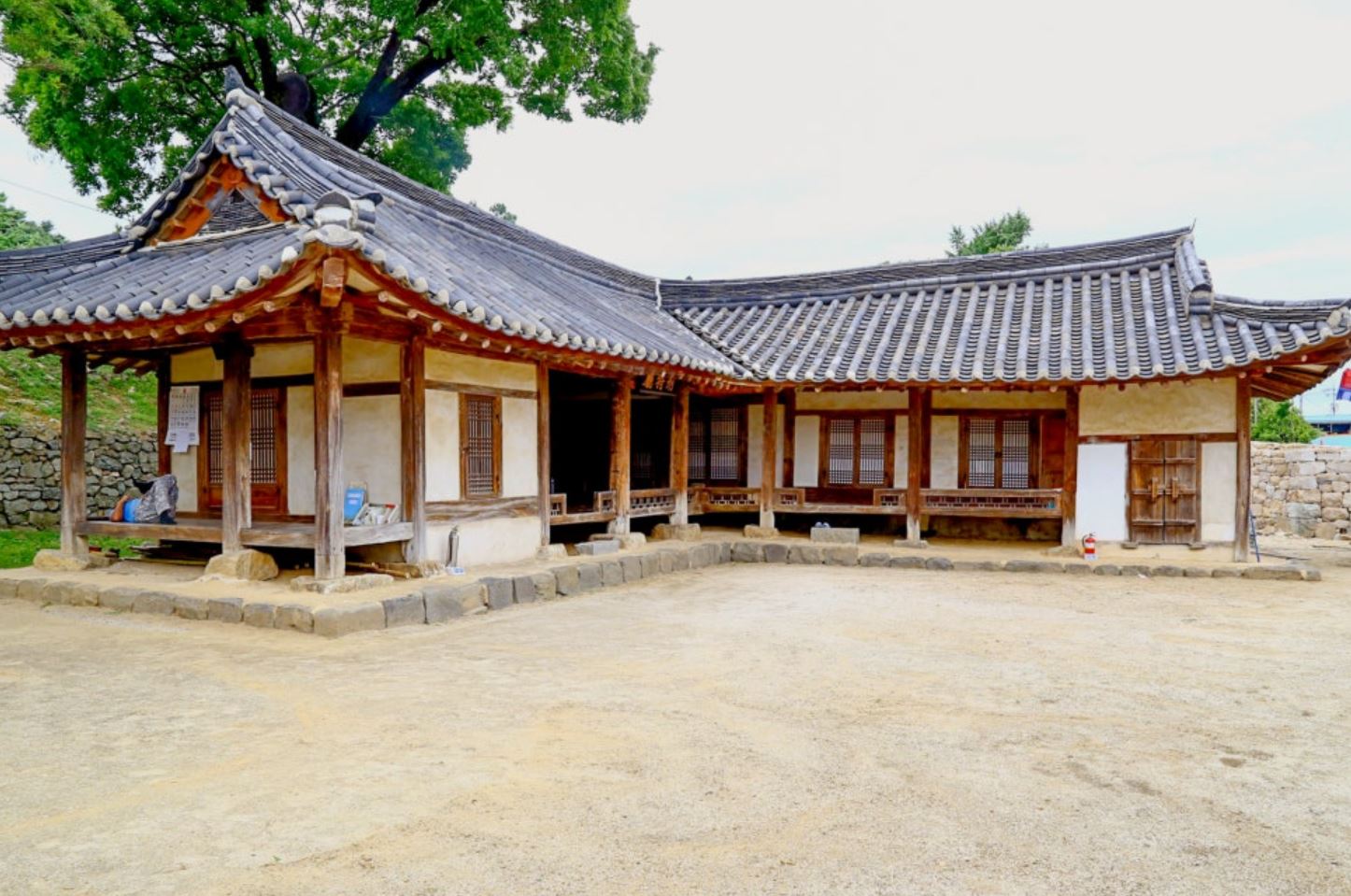
홍성 결성읍성 형방청
| 홍성 결성읍성 형방청 Punishments Clerk’s Office at Gyeolseongeupseong Walled Town |
|
|
|
|
|
홍성 여행, 조선시대 축조된 ‘결성 읍성’과 ‘결성 동헌’ 그리고 ‘형방청’, 홍성 네이버 블로그, 2022.08.24. |
|
| 대표명칭 | 홍성 결성읍성 형방청 |
|---|---|
| 영문명칭 | Punishments Clerk’s Office at Gyeolseongeupseong Walled Town |
| 한자 | 洪城 結城邑城 刑房廳 |
| 주소 | 충청남도 홍성군 결성면 읍내리 산28-2번지 |
해설문
국문
형방청은 조선 시대 소송·형벌·법률 등 사법 행정을 담당한 곳이다. 결성현* 옛 지도에는 형장청(刑將廳)이라고도 기록되어 있으며, 일제 강점기부터 1984년까지 경찰행정기관으로 사용하였다. 초석의 일부는 탑신석*을 사용하고 있는데 이는 결성동헌과 마찬가지로 주변의 절터에서 가져온 것으로 추측한다.
형방청 뒤편에 있는 회화나무는 오랫동안 마을의 안녕을 지켜주는 신목으로 여겨왔다. 일제 강점기에 일본 경찰이 회화나무의 가지를 쳐낸 뒤 벌을 받아 벙어리가 되었다고 하는데, 그 이후 이 나무를 항일목(抗日木)이라고 부르기도 했다. 마을 주민들은 매년 단오날에 민속축제로 신목제를 지내고 있다.
- 결성현: 충청남도 홍성군 일대의 옛 이름.
- 탑신석: 석탑의 몸체를 이루는 돌
영문
Punishments Clerk’s Office at Gyeolseongeupseong Walled Town
A punishments clerk’s office oversaw local judicial administration, including lawsuits, legislation, and punishments, during the Joseon period (1392-1910).
This punishments clerk’s office was part of the Gyeolseong Local Government, which was was established in 1451 within Gyeolseongeupseong Walled Town. Among the local government buildings, only the punishments clerk’s office, magistrate’s office, and book repository remain. From the Japanese colonial period (1910-1945) until 1984, the punishments clerk’s office was used as a police administration building. Notably, some of the building’s pillar base stones appear to be repurposed pagoda body stones brought from a nearby temple site.
Behind the punishments clerk’s office is a pagoda tree that has long been regarded as a sacred village guardian. It is said that during the Japanese colonial period, when the Japanese police cut away some of the tree’s branches, they suddenly became mute as a divine punishment. Since then, the tree came to be known as Hangilmok, meaning the “Anti-Japanese Tree.” Each year, the village residents perform a ritual honoring the tree on the 5th day of the 5th lunar month.
영문 해설 내용
형방청은 조선시대 지방에서 소송·형벌·법률 등 사법 행정을 담당한 곳이다.
이곳은 1451년 결성읍성 내에 지어진 결성 관아의 형방청이다. 원래의 건물들 중에서는 현재 동헌, 형방청, 책실만이 남아 있다. 형방청 건물은 일제강점기부터 1984년까지 경찰행정기관으로 사용되기도 하였다. 건물 초석의 일부는 인근 절터에서 가져온 불탑의 몸돌을 사용한 것으로 추정된다.
형방청 뒤에 있는 회화나무는 오랫동안 마을의 안녕을 지켜주는 신목으로 여겨져 왔다. 일제강점기에 일본 경찰이 회화나무의 가지를 쳐낸 뒤 벌을 받아 벙어리가 되었다고 하는데, 그 이후 이 나무를 항일목(抗日木)이라고 부르기도 했다. 마을 주민들은 매년 음력 5월 5일에 신목제를 지내고 있다.

