보은 최감찰댁
| 보은 최감찰댁 Choegamchaldaek House, Boeun |
|
|
|
|
|
보은 최감찰댁, 국가문화유산포털, 문화재청. |
|
| 대표명칭 | 보은 최감찰댁 |
|---|---|
| 영문명칭 | Choegamchaldaek House, Boeun |
| 한자 | 報恩 崔監察宅 |
| 주소 | 충청북도 보은군 삼승면 선곡리 281번지 |
| 지정(등록) 종목 | 국가민속문화유산 제139호 |
| 지정(등록)일 | 1984년 1월 14일 |
| 분류 | 유적건조물/주거생활/주거건축/가옥 |
| 시대 | 조선시대 |
| 수량/면적 | 7필지/5,178㎡ |
| 웹사이트 | 보은 최감찰댁, 국가문화유산포털, 문화재청. |
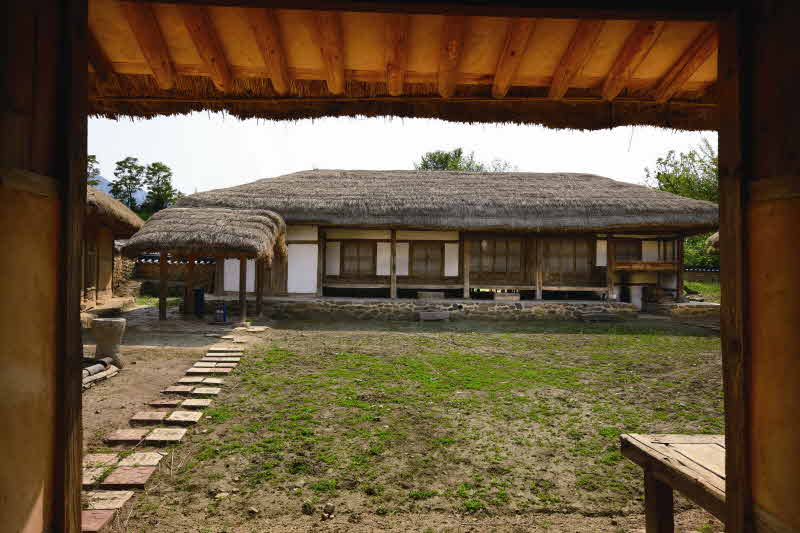
목차
해설문
국문
2019
이 집은 2018년 사랑채 보수공사 중에 “숭정기원후임술삼월초팔일유시상량 해좌사향 계해생 성조운(崇禎紀元後壬戌三月初八日酉時上樑 亥坐巳向 癸亥生 成造運)”이라는 상량목이 발견되어 1682년(숙종 8)에 지어졌음이 확인되었다. 안채는 “숭정기원후오임진(崇禎紀元後五壬辰)”이라는 상량문 기록에 의해 1892년(고종 29)에 지어졌음을 알 수 있다.
이 집은 현재 안채와 사랑채, 중문채, 광채를 비롯하여 곳간채와 뒤주 등의 부속채로 구성되어 있다. 사랑채는 기와집이지만 안채와 나머지 건물은 초가집으로 된 특이한 구성형식을 띠고 있다.
이 집은 앞쪽에 ‘一’자형 사랑채, 뒤쪽에 사랑채와 직각축으로 ‘一’자형의 안채를 배치하고 담으로 구획해 바깥마당에서 안마당까지 ‘ㄱ’자로 꺾어 들어가게 했다. 이처럼 안채와 사랑채의 향을 달리 배치한 것은 향을 같게 하는 일반적인 배치방식과는 다른 점이다.
안채는 초가임에도 큼직한 부재를 사용하고 짜임새 있는 구조를 갖춘 견실한 집이다.
이 집은 과거 양반주택이 고수해 왔던 유교적 규범에서 벗어나 생활의 편의를 도모하면서 부(富)를 과시했던 당시의 시대적 경향을 보여주고 있다.
2026
보은 최감찰댁은 2018년에 사랑채를 보수하던 중에 상량문에서 ‘숭정기원후 임술 삼월 초팔일 유시 상량 해좌사향 계해생 성조운(崇禎紀元後 壬戌 三月 初八日 酉時 上樑 亥坐巳向 癸亥生 成造運)’이라는 글이 발견되었다. 그 기록으로 사랑채가 숙종 8년(1682)에 지어졌음이 확인되었다. 안채는 숭정 기원후 오임진(崇禎 紀元後 五壬辰)이라는 상량문의 기록에 따라 고종 29년(1892)에 지어졌음을 알 수 있다.
이 집은 안채와 사랑채, 중문채, 광채를 비롯하여 곳간채와 뒤주 등의 부속 건물로 구성되어 있다. 사랑채는 기와집이고, 안채와 나머지 건물은 초가집이다. 안채는 초가임에도 큼직한 부재를 사용하여 짜임새 있게 지었다.
앞쪽에는 ‘ㅡ’ 자 모양의 사랑채를, 뒤쪽에는 사랑채와 직각 축으로 ‘ㅡ’ 자 모양의 안채를 배치하였고, 담으로 경계를 지어 바깥마당에서 안마당까지 ‘ㄱ’ 자 모양으로 꺾여 들어가게 했다. 이처럼 안채와 사랑채의 방향을 다르게 배치한 것은 방향을 같게 하는 일반적인 배치 방식과는 다른 점이라고 할 수 있다.
보은 최감찰댁은 과거에 양반 주택이 고수해 왔던 유교적 규범에서 벗어나 생활의 편의를 도모하면서 부를 과시했던 당시의 시대적 경향을 보여 준다.
영문
2019
Choe Ik-su’s House, Boeun
This house was the home of Choe Ik-su (1682-1757), a civil official of the Joseon period (1392-1910). The house is located in Seongok-ri, the place where the Hwasun Choe clan settled in the mid-16th century and established their clan village.
The house consists of a men’s quarters, gate quarters, inner gate quarters, women’s quarters, and multiple storehouses. The men’s quarters was built in 1682, while the women’s quarters was built later in 1892. The men's quarters and gate quarters are connected, with the men's quarters on the left and the gate quarters on the right. A wall was built behind the men’s quarters to the left in order to hide the women’s quarters from the view of male guests, which shows the importance of the separation of the sexes during the Joseon period. The women's quarters can be entered by passing through the inner gate quarters. The women's quarters has a thatched roof, which is uncommon as such a roof is typically found on the less important buildings of a house. However, it was built with sturdy materials using advanced techniques, and the structure of the building is of fine quality. The women's quarters is surrounded in the front and back by wide yards, which were used by the women of the house for housework and relaxation.
2026
Choegamchaldaek House, Boeun
This house is an upper-class residence from the late period of the Joseon dynasty (1392-1910). It became known as Choegamchaldaek, meaning “House of the Inspector,” because a former resident, Choe Ik-su, served as an inspector (gamchal) at the Office of the Inspector-General.
The house complex consists of a women’s quarters, a men’s quarters, an inner gate quarters, storage quarters, and other auxiliary structures such as granaries and rice chests. The men’s quarters was built in 1682 with a tiled roof, while the women’s quarters, built in 1892, and the other buildings feature thatched roofs. Despite being a thatched-roof structure, the women’s quarters is notably well-constructed, using large, sturdy timber to create a solid and sophisticated frame.
The men’s quarters and the gate quarters are connected to each other. Behind them, the inner gate quarters and the women’s quarters are arranged at a right angle to the men’s quarters. Furthermore, the men’s and women’s quarters face different directions, and an L-shaped wall was placed between the rear of the men’s quarters and the inner courtyard to shield the women’s quarters from outside view. This layout reflects the separation of male and female spaces in Joseon-period houses. At the same time, the house illustrates a trend of the time moving away from strict Confucian norms, emphasizing convenience in daily life while also displaying wealth.
영문 해설 내용
2019
이곳은 조선 후기의 문신인 최익수(1682-1757)가 살던 집이다. 이 집이 위치한 선곡리는 16세기 중반부터 화순최씨가 정착하여 집성촌을 형성하였다.
대문채, 중문간채, 사랑채, 안채, 곳간채로 이루어져 있으며, 사랑채는 1682년에 지어졌고 안채는 1892년에 지어졌다. 사랑채와 대문채는 서로 연결되어 있다. 사랑채 뒤편에는 담장이 설치되어 밖에서 안채가 보이지 않도록 했다. 이는 조선시대 남녀 공간의 구분을 보여준다. 안채는 중문간채를 통해 들어갈 수 있게 했다. 안채에는 초가지붕이 있는데, 이러한 지붕은 보통 집에서 덜 중요한 건물에 쓰이기 때문에, 흔치 않은 사례이다. 그러나 초가임에도 불구하고 사용된 부재가 큼직하고 건축구조나 세부기법이 매우 고급스럽다. 안채 주위에는 넓은 마당이 있어 여성들의 휴식 및 가사공간으로 활용하도록 있다.
2026
이 집은 조선 후기의 양반 가옥이다. 이곳에 살던 최익수가 조선시대 사헌부의 관직인 감찰을 지낸 데서, ‘최감찰댁’이라 불리게 되었다.
이 집은 안채, 사랑채, 중문채, 광채를 비롯하여 곳간채와 뒤주 등 여러 부속 건물로 이루어져 있다. 사랑채는 1682년에 기와집으로 지어졌으며, 1892년에 지어진 안채를 포함한 나머지 건물은 모두 초가집이다. 안채는 초가임에도 큼직한 부재를 사용하여 짜임새 있게 지은 것이 특징이다.
사랑채와 대문채는 서로 연결되어 있고, 그 뒤쪽에는 중문채와 안채를 사랑채와 직각을 이루도록 배치하였다. 또한 사랑채와 안채의 방향을 다르게 하고, 사랑채 뒤편과 안마당 사이에 ㄱ자 모양의 담장을 두어 바깥에서 안채가 보이지 않도록 하였다. 이는 조선시대 남녀 공간을 구분하는 주거 방식을 보여 준다. 이 집은 전통적인 양반 가옥의 유교적 규범에서 벗어나 생활의 편의를 도모하는 한편, 부를 과시하려 했던 당시의 시대적 경향을 잘 보여 준다.
갤러리
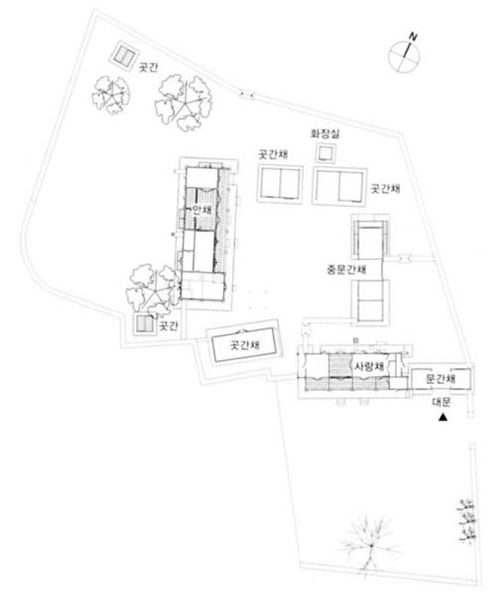
최감찰댁 배치도

참고자료
- 중요민속문화재 지정 명칭의 합리적 조정, 문화재청 보도자료, 2017.02.28. https://www.khs.go.kr/synap/skin/doc.html?fn=NEWS_201702281055339140&rs=/convertResult/newsfile/
- “유학의 전통 물려받은 최태하 가옥”, 보은신문, 2010.05.13. http://www.boeuni.com/news/articleView.html?idxno=27219

