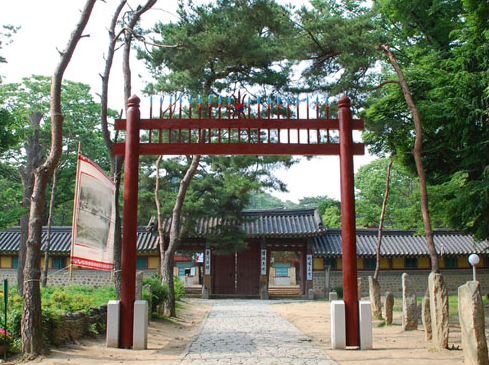
화성 용주사 홍살문
| 화성 용주사 홍살문 Red Spiked Gate of Yongjusa Temple, Hwaseong |
|
|
|
|
|
홍살문, 용주사 홈페이지. |
|
| 대표명칭 | 화성 용주사 홍살문 |
|---|---|
| 영문명칭 | Red Spiked Gate of Yongjusa Temple, Hwaseong |
| 한자 | 華城 龍珠寺 紅箭門 |
| 주소 | 경기도 화성시 용주로 136 |
해설문
국문
홍살문은 왕실의 묘나 궁전, 관아 등의 정면 입구에 세워 경의를 표하는 문이다. 붉은색 기둥을 두 개 세우고, 기둥을 연결한 보에 붉은 살을 죽 박은 형태이다. 용주사에는 사찰 중 유일하게 홍살문이 있는데, 그 이유는 정조대왕이 아버지인 사도세자의 명복을 빌고자 용주사를 창건하고 호성전(護聖殿)을 건립하여 이곳에 사도세자의 위패를 모셨기 때문이다.
기록에 따르면 용주사에서는 사도세자와 혜경궁홍씨(헌경왕후 獻敬王后), 정조대왕과 효의왕후(孝懿王后)의 위패를 모시고 일 년에 여섯 번 제사를 지내 왔다고 한다. 그러나 일제 탄압이 있었던 1907년을 끝으로 중단되었다.
2008년 6월 24일에 100년 만에 사도세자의 제향을 다시 모시면서 홍살문을 복원하고, 호성전의 현판을 걸었다. 이는 효찰대본산 용주사가 세워질 당시의 모습을 회복하여 우리나라 효 문화를 널리 알리는 한편, 정조대왕이 아버지 사도세자에게 못다 한 혼정신성(昏定晨省)의 효를 사후에라도 실천하려 했던 뜻을 잇고자 함이다.
영문
Red Spiked Gate of Yongjusa Temple, Hwaseong
A red spiked gate, called hongsalmun in Korean, is traditionally installed at the entrance of a venerated space, such as a shrine, a royal tomb, or a royal palace. Painted red, the wooden gate consists of two pillars joined by a horizontal beam with evenly spaced spikes on top.
This red spiked gate at the entrance to Yongjusa Temple is the only one of its kind to be found at a Buddhist temple in Korea. This unique circumstance is related to the temple’s historical connection with the royal family of the Joseon dynasty (1392-1910). The temple was founded by King Jeongjo (r. 1776-1800) to honor his late father, Crown Prince Sado (1735-1762). A shrine was built within the temple to house the crown prince’s spirit tablet, and later those of King Jeongjo, his mother Lady Hyegyeong, and his wife Queen Hyoui.
Veneration rituals were performed here six times a year until 1907, when they were forcibly stopped by Imperial Japan. The rituals were resumed in 2008, at which time current red spiked gate was built and the shrine was given its name plaque. This restoration allowed Yongjusa Temple to once again carry out its intended role as a venue of filial devotion.
영문 해설 내용
홍살문은 사당, 왕릉, 궁궐 등 전통적으로 신성하게 여겨지는 공간의 입구에 세워졌다. 붉은색으로 칠해진 이 목조 문은 두 개의 기둥과 이를 연결하는 보, 그리고 그 위에 일정한 간격으로 배열된 살로 구성되어 있다.
용주사는 한국의 사찰 중 유일하게 홍살문이 있는 곳이다. 이러한 독특한 사례는 용주사가 조선 왕실과 역사적으로 깊은 관련이 있기 때문이다. 이 사찰은 정조(재위 1776-1800)가 아버지인 사도세자(1735-1762)의 넋을 기리기 위해 창건하였다. 사찰 안에는 사도세자의 위패를 모신 사당이 세워졌으며, 이후 정조와 어머니 혜경궁홍씨, 아내 효의왕후의 위패도 추가로 모셔졌다.
이곳에서는 매년 여섯 차례에 걸쳐 제향이 올려졌으나, 1907년 일제에 의해 강제로 중단되었다. 제향은 2008년에 다시 시작되었으며, 이때 현재의 홍살문이 세워지고 사당의 현판도 다시 걸렸다. 이를 통해 용주사는 다시금 효심을 실천하는 공간으로서 본래의 역할을 이어가게 되었다.

