청주 목우사지 석조여래입상
| 청주 목우사지 석조여래입상 Stone Standing Buddha from Mogusa Temple Site, Cheongju |
|
|
|
|
|
청주 목우사지 석조여래입상, 충청북도 문화재대관 I, 충청북도문화재연구원, 2016, 258쪽. |
|
| 대표명칭 | 청주 목우사지 석조여래입상 |
|---|---|
| 영문명칭 | Stone Standing Buddha from Mogusa Temple Site, Cheongju |
| 한자 | 淸州 牧牛寺址 石造如來立像 |
| 주소 | 충청북도 청주시 상당구 용담동 산 22-5번지 |
| 지정(등록) 종목 | 충청북도 유형문화유산 |
| 지정(등록)일 | 2005년 5월 6일 |
| 분류 | 유물/불교조각/석조/불상 |
| 수량/면적 | 1구 |
| 웹사이트 | 청주 목우사지 석조여래입상, 국가문화유산포털, 문화재청. |
해설문
국문
2015
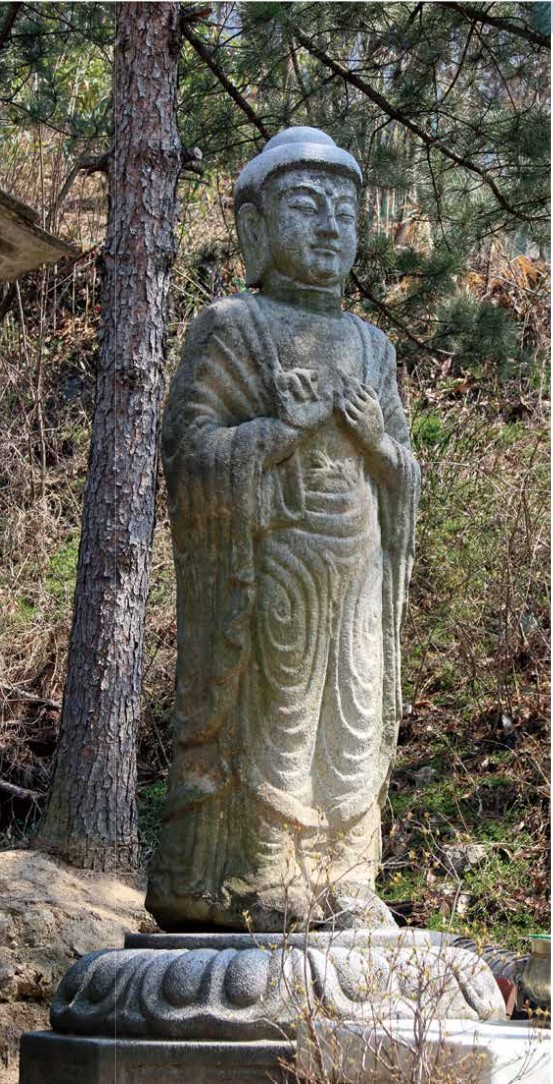
청주 우암산 남쪽 계곡의 목우사지(牧宇寺址)에서 2002년에 봉황사(鳳凰寺)로 옮겨온 이 불상은 중생을 구제하여 서방 극락정토로 왕생하게 하는 아미타불로서 머리가 없어진 것을 최근에 새로 조각하여 올려놓았다. 불상을 받치고 있던 대좌(臺座)와 부처의 몸에서 나는 빛을 표현한 광배(光背)도 없어져 이곳으로 옮겨오면서 연화대좌(蓮花臺座)를 새로 만들었다. 부처의 목에는 후덕함을 나타내는 삼도(三道)가 뚜렷하고, 법의(法衣)는 양쪽 어깨에 걸쳐 입은 통견(通肩)으로서 양팔을 감싸고 부드러운 선을 이루며 발목까지 흘러내렸으며, 뒷면에도 옷주름(衣紋)이 사실적으로 표현 되었다. 당당한 어깨 사이로 가슴이 드러나고 배에 옷매듭이 표현되었으며, 수인(手印)은 오른손바닥을 밖으로 향하고 왼손바닥을 안으로 향한 전법륜인을 취하고 있다. 부처 몸 전체에 양감이 부드럽게 드러나 있으며 조각수법이 뛰어난 불상으로서 통일신라 말기 내지 고려 초에 조성된 불상으로 추정된다. 본래의 크기는 알 수 없고, 현재의 높이는 205cm이다.
2025
청주 목우사지 석조여래입상은 충청북도 청주시 상당구 용담동 봉황사에 있는 불상이다. 이 불상은 본래 우암산 남서쪽 자락의 목암사(牧岩寺)에 소장되어 있었는데 2002년에 목암사가 폐사되면서 지금의 위치로 옮겨졌다. 목우사지 주변에서 통일신라~고려 초기의 유물이 출토된 점으로 보아, 이 석조여래입상도 이 무렵의 작품으로 추정된다.
불상의 머리는 한국전쟁 때 파괴되었는데 2002년에 새로 만든 것이다. 목 부분에는 주름이 묘사되어 있고, 어깨가 넓지 않으며 몸 전체의 입체감이 부드럽게 드러난다. 옷은 양쪽 어깨에 걸쳐 있으며, 양팔을 감싸 발목까지 부드러운 선으로 흘러내린다. 뒷면에도 옷의 주름이 사실적으로 표현되어 있다. 어깨 사이로 가슴이 드러나고, 배에는 매듭이 묶여 있다. 손 모양은 오른손바닥이 밖으로, 왼손바닥이 안으로 향하는 전륜법인(轉輪法印) 자세로, 석가모니가 설법하는 모습을 상징한다.
영문
Stone Standing Buddha from Mogusa Temple Site, Cheongju
2015
This statue is presumed to have been made between the late period of Silla (57 BCE – 935 CE) and the early period of the Goryeo Dynasty (918-1392). This hand gesture, with the left palm is turned inward toward the body and the right palm is turned outward in front of his chest, indicates that it is the statue of Amitabha, the Buddha of Western Paradise. It is believed that all beings who call the name of Amitabha can be reborn in the Buddhist paradise of the West. This statue was moved from Mogusa Temple Site in the southern valley of Uamsan Mountain to the current location in Bonghwangsa Temple in 2002. When it was found, the statue was missing the head part, and the present head was reconstructed at the time of relocation. The original pedestal and the mandorla, the radiance surrounding the body, were also missing, so the lotus pedestal was newly made for the statue. The original size is not known, but the height of the present statue is 2.05 m.
2025
This stone standing Buddha at Bonghwangsa Temple is said to have been discovered at the site of Mogusa Temple. It was originally enshrined at Mogamsa Temple on the southwestern slope of Uamsan Mountain, but was moved to its current location in 2002 after Mogamsa was closed. Artifacts unearthed near Mogusa Temple Site, dating from the Unified Silla (676-935) to the early period of the Goryeo dynasty (918-1392), suggest that the statue was made around that time.
The original head of the statue was destroyed during the Korean War (1950-1953), and the current one was newly made in 2002. The three creases encircling his neck represent the “three destinies” of afflictions, actions, and suffering. The robe covers both shoulders, wrapping around the arms and flowing smoothly down to the ankles. The folds on the back are also rendered realistically. The hands are raised to chest level, with the right palm facing outward and the left palm inward, a gesture symbolizing the Buddha preaching the Dharma.
영문 해설 내용
2025
봉황사에 있는 이 석조여래입상은 본래 목우사라는 절터에서 발견된 것으로 전해진다. 원래는 우암산 남서쪽 자락의 목암사에 봉안되어 있었으나, 2002년 목암사가 폐사되면서 지금의 자리로 옮겨졌다. 목우사지 일대에서 통일신라시대부터 고려 초기의 유물이 출토된 점으로 보아, 이 불상 역시 그 무렵에 조성된 것으로 추정된다.
불상의 원래 머리는 한국전쟁 때 파손되었으며, 현재의 머리는 2002년에 새로 조성한 것이다. 목에는 번뇌·업·고통을 상징하는 삼도(三道)가 새겨져 있다. 옷은 양쪽 어깨에 걸쳐 있으며, 양팔을 감싸며 발목까지 부드럽게 흘러내린다. 뒷면에도 옷주름이 사실적으로 표현되어 있다. 두 손은 가슴 높이로 들어 오른손바닥은 밖을, 왼손바닥은 안을 향하고 있는데, 이러한 손 모양은 석가모니가 설법하는 모습을 상징한다.

