군위 인각사 명부전 석조불상 일괄
| 군위 인각사 명부전 석조불상 일괄 Stone Statues in Myeongbujeon Hall of Ingaksa Temple, Gunwi |
|
|
|
|
|
군위 인각사 명부전 석조불상 18구, 대구시 유형문화유산 지정, 연합뉴스, 2025.06.10. |
|
| 대표명칭 | 군위 인각사 명부전 석조불상 일괄 |
|---|---|
| 영문명칭 | Stone Statues in Myeongbujeon Hall of Ingaksa Temple, Gunwi |
| 한자 | 軍威 麟角寺 冥府殿 石造佛像 一括 |
| 지정(등록) 종목 | 대구광역시 유형문화유산 |
해설문
국문
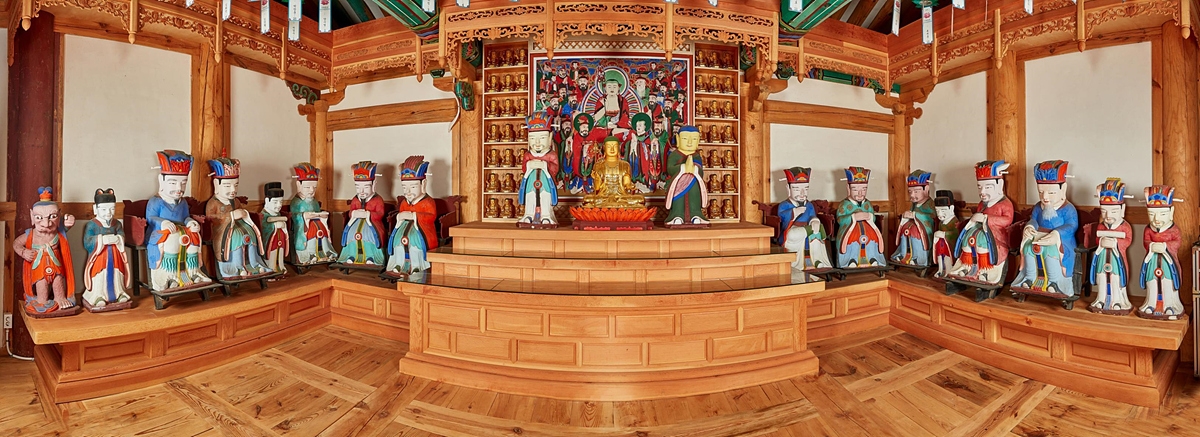
군위 인각사 명부전에 봉안된 존상 18구는 도명존자입상, 무독귀왕입상, 시왕상 10구, 판관상 2구, 귀왕상 2구, 사자상 1구, 장군상 1구로 구성되어 있다.
임진왜란 이후 전국 각지의 사찰이 전소되면서, 17세기 들어 사찰 제건 불사가 활발히 이루어졌다. 이 과정에서 불상 조성에 특화된 승님들이 등장하였고, 현재 학계에서는 이들을 ‘조각승’으로 분류하고 있다. 당시 불상 조성 기록과 사찰 역사를 정리한 기록들을 통해 이들의 법명이 다수 확인되고 있으며, 조각 양식과 계보에 관한 연구도 활발히 진행되고 있다.
인각사 명부전 존상은 이러한 17세기 조각승의 활동과 관련하여 주목되는 작품이다. 1670년에 조성된 경상남도 고성 옥천사 명부전 존상과 형태적으로 밀접한 유사성을 보여서 17세기 후반에 활동한 조각승 경옥 또는 그 계보에 속한 조각승이 제작에 참여한 것으로 추정된다. 특히 대구광역시 유형문화유산으로 지정된 인각사 극락전 석조아미타여래삼존좌상과 비교할 때, 얼굴 표현, 신체 비례, 법의 주름 형식 등이 거의 동일하여 두 전각의 존상이 함께 조성되었을 가능성도 고려해 볼 수 있다.
조각승 경옥이 조성한 불상은 대구 및 경상북도 지역에 다수 남아 있지 않기 때문에, 인각사 명부전의 석조불상 일괄은 조각승 경옥의 활동범위와 조각 양식의 전개 과정을 살필 수 있는 중요한 자료로 평가된다.
영문
Stone Statues in Myeongbujeon Hall of Ingaksa Temple, Gunwi
Myeongbujeon Hall of Ingaksa Temple enshrines a collection of 19 Buddhist statues, including Ksitigarbha Bodhisattva, Monk Daoming, Demon King Wudu, the Ten Underworld Kings, two judges, two ghost kings, one messenger, and one general. Ksitigarbha (Bodhisattva of Great Vows), depicted seated in the center of the altar, took on the responsibility of rescuing unfortunate beings from hell and vowed to postpone Buddhahood until all beings are saved from the world of suffering. To the left and right of Ksitigarbha stand the sage monk Daoming and Demon King Wudu. Monk Daoming was a monk who is said to have accidentally experienced the afterlife and returned to the world of the living to teach about what he had seen, while Demon King Wudu is believed to expel evil from people’s hearts. Apart from the image of Ksitigarbha, the statues are presumed to have been made in the late 17th century and were designated as a Daegu Tangible Cultural Heritage in 2025.
The statues resemble those enshrined in Myeongbujeon Hall of Okcheonsa Temple in Goseong, Gyeongsangnam-do Province, which were created in 1670 by the monk artisan Gyeongok. Thus, they are thought to have been made by Gyeongok or one of his followers. In addition, the statues’ facial expressions, body proportions, robe design, and garment folds are nearly identical to the Stone Seated Amitabha Buddha Triad enshrined in Ingaksa Temple’s Geungnakjeon Hall, suggesting that they may have been made at the same time. In the aftermath of the Japanese invasions of 1592-1598, many Buddhist temples, statues, and pagodas were actively reconstructed throughout the 17th century. It is within this context that the statues are thought to have been created. As few sculptures by Gyeongok can be found in the Daegu and Gyeongsangnam-do region, these stone statues are particularly valued for providing insight into the changes in his scope and style.
영문 해설 내용
인각사 명부전에는 지장보살좌상, 도명존자입상, 무독귀왕입상, 시왕상 10구, 판관상 2구, 귀왕상 2구, 사자상 1구, 장군상 1구 등 총 19구가 모셔져 있다. 불단 가운데에 앉아 있는 지장보살은 지옥에서 고통받는 중생을 구원하며, 모든 중생을 구원할 때까지 성불을 미루는 보살이다. 지장보살의 양옆에는 도명존자와 무독귀왕이 서 있다. 도명존자는 사후세계를 경험하고 이승에 돌아와 자신이 본 바를 세상에 알린 승려이고, 무독귀왕은 사람들의 악한 마음을 없애준다는 귀신의 왕이다. 지장보살을 제외한 나머지 존상들은 17세기 후반에 만들어진 것으로 추정되며, 2025년 대구광역시 유형문화유산으로 지정되었다.
이 존상들은 조각승 경옥이 1670년에 조성한 경상남도 고성 옥천사 명부전의 존상들과 유사성을 보인다. 따라서 경옥 또는 그 계보에 속한 조각승이 이 존상들의 제작에 참여한 것으로 추정된다. 또한 인각사 극락전에 모셔진 석조아미타여래삼존좌상과도 얼굴 표현, 신체 비례, 법의 주름 형식 등이 거의 동일하여 두 전각의 존상들이 함께 조성되었을 가능성도 있다. 임진왜란 이후 17세기 들어 사찰과 불상, 불탑 등의 재건 불사가 활발히 이루어졌으며, 인각사 명부전의 불상들도 이러한 배경에서 만들어진 것으로 보인다. 특히 조각승 경옥이 조성한 불상은 대구 및 경상북도 지역에 다수 남아 있지 않기 때문에, 이 석조불상 일괄은 경옥의 활동 범위와 조각 양식의 전개 과정을 살필 수 있는 중요한 자료로 평가된다.

