광양 용지큰줄다리기
| 광양 용지큰줄다리기 Yongji Keun Juldarigi (Great Tug-of-War of Yongji), Gwangyang |
|
|
|
|
|
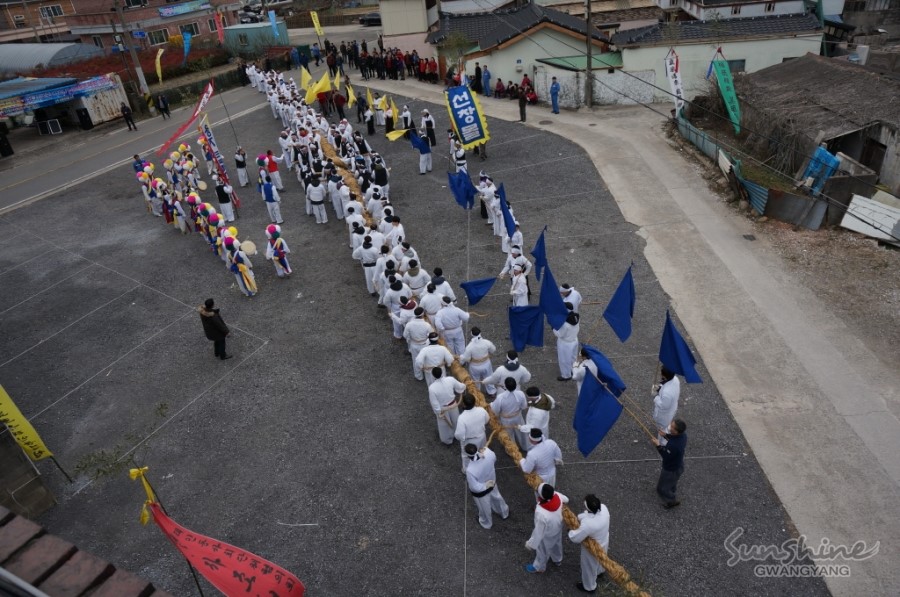
“김 풍작을 기원하는 용지큰줄다리기”, 광양시 공식 블로그, 2016.02.26. |
|
| 대표명칭 | 광양 용지큰줄다리기 |
|---|---|
| 영문명칭 | Yongji Keun Juldarigi (Great Tug-of-War of Yongji), Gwangyang |
| 한자 | 光陽 龍址큰줄다리기 |
| 주소 | 전라남도 광양시 태인동 용지마을 |
해설문
국문
광양 용지큰줄다리기는 350여 년의 역사를 지닌 민속놀이로, 풍수지리설에 바탕을 두고 있다.
옥녀산발의 들말 형국*인 용지마을은 좋은 기운과 복을 불러오기 위해 들말에 실을 길게 늘여야 한다고 믿었다. 이 믿음으로 인해 줄다리기는 마을의 번영을 기원하는 민속행사로 자리 잡았다.
세계 최초로 김 양식이 시작된 이곳에서는 정월 대보름 밤마다 김 풍작을 기원하며 줄다리기를 해왔다. 마을 주민들은 안몰과 선창몰로 편을 나누어, 안몰은 암줄을, 선창몰은 수줄을 만들어 메고 나와 마을 중앙에서 줄다리기를 벌인다.
큰줄다리기는 ① 볏짚을 모으는 ‘볏짚 거두기’, ② 마을 빈터에서 줄을 꼬아 만드는 ‘줄드리기’, ③ 골목을 경계로 편을 나누는 ‘편가르기’, ④ 줄을 메고 마을을 도는 ‘길놀이’, ⑤ 고를 걸기 전, 공격 자세를 취하는 ‘진잡이’, ⑥ 암줄과 수줄을 연결하는 ‘고걸이’, ⑦ 김 풍작을 기원하는 ‘제의’, ⑧ ‘줄다리기’, ⑨ ‘뒤풀이’로 이어진다.
줄드리기 과정에서 부르는 줄드리는 소리와 진잡이 때 두 줄이 주고받는 줄 소리는 후렴구가 발달하였으며, 웅장하고 힘찬 기운이 넘쳐 난다. 또한 고걸이 과정에서 등장하는 줄 소리는 해학적이고 유쾌하다.
광양 용지큰줄다리기는 용지큰줄다리기보존회를 중심으로 전통문화 체험 행사와 지역 공동체 사업을 통해 그 맥을 이어가고 있다.
- 옥녀산발(玉女散髮)의 들말 형국: 머리카락을 푼 옥녀의 모습이, 베를 맬 때 사용하는 삼각형 나무틀인 들말의 모양과 비슷함.
영문
Yongji Keun Juldarigi (Great Tug-of-War of Yongji), Gwangyang
The Great Tug-of-War of Yongji is a traditional community performance of Yongji Village in Gwangyang dating back to the 17th century. Typically, tug-of-war performances are held to promote amity and unity within the community. As the birthplace of gim (seaweed) cultivation in Korea, Yongji Village is also known for its tug-of-war performance enacted by its residents on the first full moon of the lunar year to wish for an abundant gim harvest. The local tug-of-war tradition has some roots in Korean feng shui principles, according to which the terrain of Yongji Village requires the shape of an elongated rope to attract good energy and fortune.
The performance consists of the following stages: ① Rice straw collecting; ② Rope weaving (which takes place in open area of the village); ③ Dividing up teams (based on neighborhood boundaries); ④ Street parade (which involves carrying the rope around the village); ⑤ Assuming the fighting stance; ⑥ Connecting the ends of the male and female ropes; ⑦ An offering ritual to wish for an abundant gim harvest; ⑧ Performing the tug-of-war; ⑨ Closing celebration. The stages of rope weaving and assuming the fight stances are performed while singing and exchanging chants between the teams. These chants feature a well-developed chorus structure and are full of energy. The stage of connecting the ends of the two ropes is also accompanied by humorous and vigorous chanting.
The local tug-of-war tradition continues through various traditional culture events and community projects thanks to the efforts of the Great Tug-of-War of Yongji Preservation Committee.
영문 해설 내용
용지큰줄다리기는 광양 용지마을에서 17세기부터 이어져 온 민속놀이이다. 일반적으로 줄다리기는 공동체 구성원 간의 화합과 단결을 도모하기 위해 행해진다. 한국에서 최초로 김 양식이 시작되었던 이 마을에서도 김 풍작을 기원하며 매년 정월대보름에 줄다리기를 해왔다. 또한 이 마을의 줄다리기는 풍수지리설과도 관련이 있다. 풍수지리 해석에 따르면 용지마을에 좋은 기운과 복을 불러오기 위해서는 길게 늘인 줄의 형상이 필요하다고 한다.
이 놀이는 ① 볏짚을 모으는 ‘볏짚 거두기’, ② 마을 빈터에서 줄을 꼬아 만드는 ‘줄드리기’, ③ 골목을 경계로 편을 나누는 ‘편가르기’, ④ 줄을 메고 마을을 도는 ‘길놀이’, ⑤ 고를 걸기 전, 공격 자세를 취하는 ‘진잡이’, ⑥ 암줄과 수줄을 연결하는 ‘고걸이’, ⑦ 김 풍작을 기원하는 ‘제의’, ⑧ ‘줄다리기’, ⑨ ‘뒤풀이’로 이어진다. 줄드리기 과정에서 부르는 줄드리는 소리와 진잡이 때 두 줄이 주고받는 줄 소리는 후렴구가 발달하였으며, 웅장하고 힘찬 기운이 넘쳐 난다. 또한 고걸이 과정에서 등장하는 줄 소리는 해학적이고 유쾌하다.
용지큰줄다리기는 용지큰줄다리기보존회를 중심으로 전통문화 체험 행사와 지역 공동체 사업을 통해 그 맥을 이어가고 있다.

