강북 삼성암 치성광여래회도
| 강북 삼성암 치성광여래회도 Buddhist Painting of Samseongam Heritage, Gangbuk-gu (Tejaprabha Buddha) |
|
|
|
|
|
“대한제국 황실 상징 담은 ‘삼성암 불화’ 2건 유형문화재로”, 법보신문, 2023.10.17. |
|
| 대표명칭 | 강북 삼성암 치성광여래회도 |
|---|---|
| 영문명칭 | Buddhist Painting of Samseongam Heritage, Gangbuk-gu (Tejaprabha Buddha) |
| 한자 | 江北 三聖庵 熾盛光如來會圖 |
| 지정(등록) 종목 | 서울특별시 유형문화유산 |
| 지정(등록)일 | 2023년 9월 14일 |
| 분류 | 유물 / 불교회화 / 탱화 / 불도 |
| 시대 | 1909년(융희 3년) |
| 수량/면적 | 1점 |
| 웹사이트 | 강북 삼성암 치성광여래회도, 국가유산포털, 국가유산청. |
해설문
국문
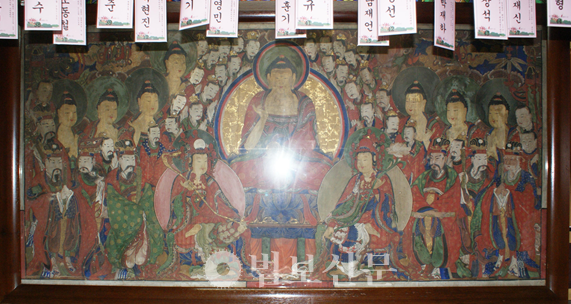
강북 삼성암 치성광여래회도는 1909년에 제작된 불화로, 상궁 3명이 시주하고, 당시 저명한 수화승 경선 응석이 제작에 참여하였다. 가로로 긴 화면의 중앙에 원형의 두광과 신광을 갖춘 치성광여래를 크게 자리하고 있으며, 화면 좌우에는 일광보살과 월광보살이 중앙의 치성광여래를 향해 있다. 그 주변에는 북두칠성을 불격화한 칠여래와 도교 신격인 칠원성군, 그리고 태상노군, 28수와 천동 등이 그려져 있다.
제작에 참여한 경선 응석은 19세기 후반에서 20세기 초 서울·경기 지역을 중심으로 활발하게 활동하며 여러 불화의 범본을 제작하였던 화승으로, 강북 삼성암 치성광여래회도는 짜임새 있는 화면 구성과 부드럽고 세련된 부처·보살의 표현, 섬세한 시문 등이 뛰어난 작품이다. 이 작품의 풍성한 금박과 화려한 문양은 당시 상궁들이 후원했던 서울·경기 지역 불화의 화려한 화풍을 잘 보여 준다. 특히 대한 제국을 상징하는 오얏꽃 문양을 여러 곳에 장식하고 있어 주목된다. 당시 시기와 지역의 특징을 잘 반영한 불화로서 2023년 9월 14일에 서울특별시 유형문화유산으로 지정되었다.
영문
Buddhist Painting of Samseongam Heritage, Gangbuk-gu (Tejaprabha Buddha)
This painting depicts Tejaprabha Buddha, a personification of the North Star (Polaris), and his retinue. Created in 1909 and funded by three royal court ladies, the painting was produced with the participation of prominent monk artisan Eungseok. Known as the creator of many outstanding Buddhist paintings, Eungseok was active in the second half of the 19th century and the early 20th century in the Seoul and Gyeonggi-do region.
Tejaprabha Buddha is depicted seated on a pedestal with halos around his torso and head in the center of the horizontally oriented canvas. Seated to either side facing him are Suryaprabha (Bodhisattva of Sunlight) and Candraprabha (Bodhisattva of Moonlight). The retinue surrounding them includes Buddhist and Daoist personifications of the Seven Stars of the Big Dipper, namely the Buddhas of the Seven Stars and the Seven Star Lords, the Supreme Elder Lord, the Twenty-Eight Mansions, and the divine youth.
The painting is characterized by its well-structured composition, its soft and elegant depiction of the buddhas and bodhisattvas, and its elaborate ornamentation. The extensive use of gold leaf and ornate decorations represent the style of paintings commissioned by the ladies of the royal court in the Seoul and Gyeonggi-do region. Notably, plum blossom designs, used in several places on the painting, symbolize the Korean Empire (1897-1910).
영문 해설 내용
이 불화는 북극성을 부처의 모습으로 표현한 치성광여래와 권속들을 그린 것이다. 상궁 3명이 시주하고 당시의 저명한 승려 화가 응석이 제작에 참여하여 1909년에 제작되었다. 응석은 19세기 후반에서 20세기 초 서울·경기 지역을 중심으로 활발하게 활동하며 여러 불화의 범본을 제작하였다.
가로로 긴 화면의 중앙에는 원형의 두광과 신광을 갖춘 치성광여래가 대좌 위에 앉아 있다. 대좌 양옆에는 일광보살과 월광보살이 치성광여래를 향해 앉아 있다. 그 주변에는 북두칠성을 불격화한 칠여래와 도교 신격인 칠원성군, 태상노군, 28수와 천동 등이 그려져 있다.
이 그림은 짜임새 있는 화면 구성과 부드럽고 세련된 부처·보살의 표현, 섬세한 시문 등이 뛰어난 작품이다. 풍성한 금박과 화려한 문양은 당시 상궁들이 후원했던 서울·경기 지역 불화의 화려한 화풍을 잘 보여 준다. 특히 대한제국을 상징하는 오얏꽃 문양을 여러 곳에 장식하고 있다.

