
하원동 탐라왕자묘
| 하원동 탐라왕자묘 |
|
|
|
|
|
하원동 탐라왕자묘, 국가유산포털, 국가유산청. |
|
| 대표명칭 | 하원동 탐라왕자묘 |
|---|---|
| 한자 | 河源洞 耽羅王子墓 |
| 주소 | 제주특별자치도 서귀포시 하원동 21번지 |
| 지정(등록) 종목 | 제주특별자치도 기념물 |
| 지정(등록)일 | 2000년 6월 21일 |
| 분류 | 유적건조물/무덤/무덤/기타 |
| 시대 | 려말선초 |
| 수량/면적 | 분묘3기 |
| 웹사이트 | 하원동 탐라왕자묘, 국가유산포털, 국가유산청. |
해설문
국문
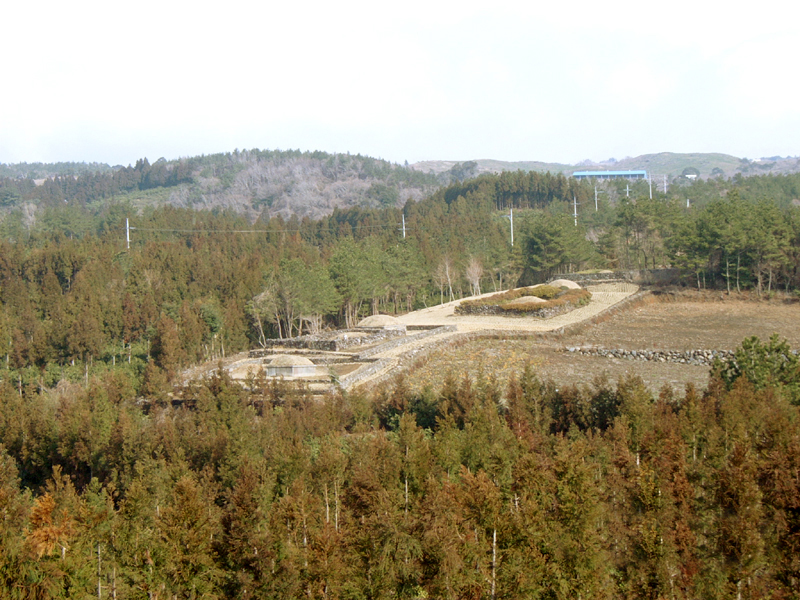
성주(星主)·왕자(王子)는 탐라국시대(耽羅國時代, 서기 476~1005)의 왕족을 나타내는 작위(爵位)로서 성주는 탐라국왕(耽羅國王)을 말한다. 고·청·고계(高·淸·高·桂) 등 3인이 신라로부터 처음 작위를 받았고 고려시대에 와서는 성주와 왕자의 양자(兩者)에 대하여 조선조 태종 2년(1402년) 성주 고봉례(高鳳禮)는 좌도지관(左都知官) 왕자 문충세(文忠世)는 우도지관(右都知官)으로 관직이 개칭되었다. 하원동 탐라왕자묘는 모두 3기이다. 이곳의 왕자묘에 대한 기록은 이원조(李源祚) 제주목사가 지은 탐라지초본(耽羅誌草本, 1842년) 대정현 고적조(大靜縣 古蹟條)에 ‘왕자묘는 대정현 동쪽 45리에 있고, 궁산(弓山) 양쪽 하천(河川) 사이에 3기가 있다’고 기록되어 있다. 그러나 왕자묘의 주인이 누구인지에 대하여는 알 수가 없다. 1998~1999년까지 2차에 걸친 발굴조사 결과 잘 다듬어진 석재(石材)로 4~8단의 판석(板石)과 할석(割石)으로 축조된 방정석곽묘(方形石槨墓)로 목관(木棺)을 사용하였다. 고려말 조선 초기 (13~15세기)에 축조된 것으로, 당 시대의 자기편과 소옥(小玉), 혼유석(魂遊石), 석재향로, 문인석(文人石) 등이 출토되어 당시 고위층의 무덤으로 추정되며, 제주도 묘제사(墓制史) 변천 과정 연구에 학술적·역사적 가치가 높이 평가 되고 있다. 하원동 탐라왕자묘 제1·2·3분(墳)은 1910년 이후 여러 차례 도굴되었으나, 2001년도에 복원하였다. 가장 남쪽에 있는 제1호분은 3기 중 가장 잘 만들어진 분묘(墳墓)이며 좌우에 문인석이 있다. 점판암(粘板岩) 판석을 받침돌로 쓰고 현무암(玄武岩) 판석을 세로로 맞춰 세워 곽을 만들었다. 규격은 남북 4.3m×동서3.0m×높이1.0m이다. 제2호분은 3기 중 가운데 있으며, 1호분과는 달리 점판암 할석을 7~8단으로 수평쌓기하여 곽을 만들었다. 규격은 남북4.3m×동서3.0m×높이1.0m이다. 제3호분은 북쪽에 있다. 3기 중 가장 먼저 축조된 것으로 추정되고 있다. 현무암 판석을 세로로 맞춰 곽을 만들었다. 규격은 남북4.5m×동서3.1m×높이0.65m이다. 묘역 3기를 조사한 결과 내부 층위는 대부분 ①표토층 ②흑갈색부식토층 ③황갈색부식토층 ④흑갈색부식토층 ⑤황갈색점토질층 ⑥목탄층 ⑦흑갈색부식토층 ⑧황갈색점토질층 ⑨흑갈색부식토층 ⑩황갈색점토질층 ⑪목탄층 ⑫흑갈색부식토층 ⑬황갈색점토질층 ⑭목탄층으로 층위(層位)가 구성돼 있다.
영문
Tamna Ruling Class Tombs in Hawon-dong
These three tombs, located in Hawon-dong, are presumed to have been built between the 13th and 15th centuries for the unknown individuals from Jejudo Island’s ruling class.
In the Jejudo island’s chronicles, compiled in 1842 by the magistrate of Jeju Yi Won-jo (1792-1871), these tombs are mentioned as Tamnaguk Wangjamyo, meaning the tombs of the Tamna state’s ruling class. Tamna is an ancient state which ruled Jejudo Island since the times of the Three Kingdom period (57 BCE-668 CE) of mainland Korea. According to historical records, the terms 'seongju' and 'wangja' were used in Tamna to refer to the king and the ruling class, respectively. Although in 1105 the state was absorbed into the Goryeo kingdom (918-1392) as a separate administrative unit, the local 'seongju' and 'wangja' retained their symbolic status until the beginning of the Joseon period (1392-1910).
The tombs were robbed several times after the establishment of Japanese colonial rule in 1910. Archeological excavations were conducted here in 1998-1999 and 2024. All three tombs are stone-lined tombs with wooden coffins featuring carefully dressed stones. Artifacts excavated from the tombs include earthenware fragments, small jades, a stone spirit seat, a stone incense burner, and civil official statues. These artifacts hold significant academic and historical value for the research on the changes in the Jejudo area’s tomb rituals.
Tomb No. 1, located in the southernmost end, is the most elaborate of the three tombs, featuring civil official statues on either side. Its chamber was made by using a slate slab as a platform and lining the walls with upright basalt slabs. The tomb measures 4.3 m from north to south, 3 m from east to west, and 1 m in height. Tomb No. 2, situated in the middle, has its chamber built out of crushed slate stones laid in 7-8 horizontal layers. It measures 4.3 m from north to south, 3 m from east to west, and 1 m in height. Tomb No. 3, located in the northernmost end, is presumed to be the earliest of the three. With a chamber made of upright basalt slabs, the tomb measures 4.5 m from north to south, 3.1 m from east to west, and 0.65 m in height.
영문 해설 내용
하원동에 있는 3기의 고분은 누구의 묘인지는 알 수 없지만, 13-15세기에 고위층의 무덤으로 축조된 것으로 추정된다.
제주목사를 지낸 이원조(1792-1871)가 1842년에 편찬한 제주 지역 읍지인 『탐라지초본(耽羅誌草本)』에서는 이 고분들을 “탐라국 왕자묘”라 칭한다. 탐라국은 삼국시대부터 지금의 제주도에 있던 옛 나라로, 왕은 “성주”, 지배계층은 “왕자”라 불렸다. 탐라국은 고려시대인 1105년 고려의 지방 행정구역 중 하나로 편입되었으나, 성주와 왕자는 조선 초까지 상징적인 존재로 유지되었다.
이 고분들은 일제강점기인 1910년 이후 여러 차례 도굴되었고, 1998~1999년과 2024년에 발굴조사가 수행되었다. 세 고분 모두 잘 다듬어진 석재로 축조된 사각형의 돌덧널무덤이며, 목관을 사용하였다. 고분들에서는 자기 조각, 소옥(小玉), 혼유석, 석제 향로, 문인석(文人石) 등이 출토되었으며, 제주 지역의 묘제사 변천 과정 연구에 학술적·역사적 가치가 높은 것으로 평가된다.
가장 남쪽에 있는 제1호분은 3기 중 가장 잘 만들어진 분묘이며 좌우에 문인석이 있다. 점판암 판석을 받침돌로 쓰고 현무암 판석을 세로로 맞춰 세워 덧널을 만들었다. 크기는 남북 4.3m×동서 3m×높이 1m이다. 가운데에 있는 제2호분은 점판암 할석을 7~8단으로 수평쌓기하여 덧널을 만들었다. 크기는 남북 4.3m×동서 3m×높이 1m이다. 북쪽에 있는 제3호분은 3기 중 가장 먼저 축조된 것으로 추정된다. 현무암 판석을 세로로 맞춰 곽을 만들었으며, 크기는 남북 4.5m×동서 3.1m×높이 0.65m이다.
참고자료
- “제주도, ‘탐라 왕자묘’ 진짜 주인 찾는다”, 동아일보, 2024.01.10. https://www.donga.com/news/Society/article/all/20240110/122974747/1
- “서귀포시 하원동 '탐라왕자묘' 주인 미궁 속으로”, 제주일보, 2024.06.17. https://www.jejunews.com/news/articleView.html?idxno=2211652

