
환구단
| 환구단 Hwangudan Altar |
|
|
|
|
|
환구단, 국가문화유산포털, 문화재청. |
|
| 대표명칭 | 환구단 |
|---|---|
| 영문명칭 | Hwangudan Altar |
| 한자 | 圜丘壇 |
| 주소 | 서울특별시 중구 소공동 87-1번지 |
| 지정(등록) 종목 | 사적 제157호 |
| 지정(등록)일 | 1967년 7월 15일 |
| 분류 | 유적건조물/종교신앙/제사유적/제사터 |
| 시대 | 대한제국시대 |
| 수량/면적 | 4,278㎡ |
| 웹사이트 | 환구단, 국가문화유산포털, 문화재청. |
해설문
국문
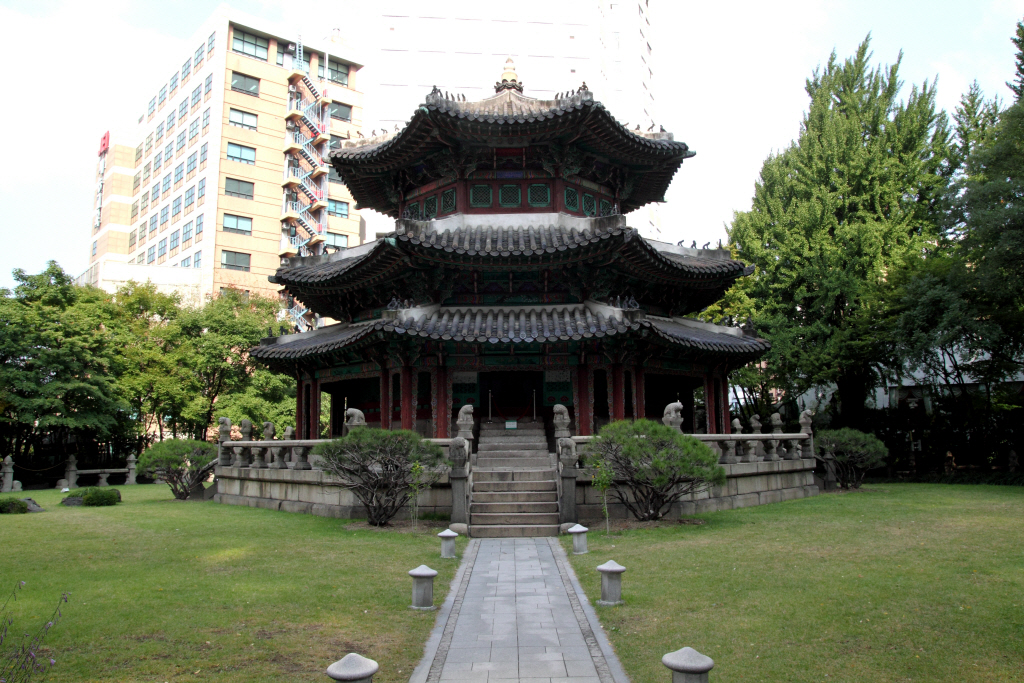
환구단은 황제가 하늘에 제사를 드리던 곳으로, 황단(皇壇), 원구단(圓丘壇), 원단(圓壇)이라고도 한다. 이곳은 조선 시대 때, 중국 사신을 맞이하던 남별궁이 있던 자리로, 1897년에 고종(高宗, 1852~1919)이 황제로 즉위하면서 고종이 머물던 황궁(현재의 덕수궁)과 마주 보는 이 자리에 환구단을 세우고 대한제국이 자주독립국임을 대내외에 널리 알렸다
환구단은 당시 왕실 최고의 도편수였던 심의석이 설계하였으며, 1897년 10월에 완공되었다.제사를 지내는 3층의 원형 제단과, 하늘 신의 위패를 모시는 3층 팔각 건물인 황궁우(皇穹宇), 돌로 만든 북인 석고(石鼓), 문 등으로 되어 있었다. 1913년에 조선 총독부가 황궁우, 돌로 만든 북, 삼문, 협문 등을 제외한 환구단을 헐고, 그 자리에 조선경성철도호텔을 지었다. 현재 환구단 터에는 황궁우와 석고 등이 남아 있다.
영문
Hwangudan Altar
Hwangudan Altar was where the emperor of Korea performed the Rite of Heaven. By performing this offering to the Spirit of Heaven, the emperor sought to demonstrate to the world that Korea was a sovereign state and that he was its absolute monarch.
Established in 1897 upon the proclamation of the Korean Empire (1897-1910), the large altar complex stood across from the imperial palace Deoksugung on the former site of the royal residence where Chinese envoys had been customarily received. Designed by Sim Ui-seok (1854-1924), the best royal architect of the time, the complex consisted of a three-tier circular stone altar (Hwangudan) where the rite was performed, an octagonal wooden shrine with a three-tier roof (Hwanggungu) where the spirit tablet was kept, and roughly a dozen auxiliary buildings.
However, in 1913, during the Japanese colonial period (1910-1945), Japanese authorities demolished the altar and most of its auxiliary buildings. On its site, they constructed the Joseon Railway Hotel (today's Chosun Westin Hotel). Today, all that remains of the complex is the main gate, the shrine, the brick gate in front of the shrine, three commemorative stone drums, and some remnants of the altar's balustrade. The site was renovated in the 2010s to restore it to its original appearance.
- 마지막 문단은 좀 더 자세히 쓰고 싶으면 이렇게 해도 될 것 같아요
- However, in 1913, during the Japanese colonial period (1910-1945), Japanese authorities demolished the altar and most of its auxiliary buildings. On its site, they constructed the Joseon Railway Hotel. All that remained of the complex was the main gate, the shrine, the brick gate in front of the shrine, and three commemorative stone drums. The main gate went missing during the construction of the current Chosun Westin Hotel building in the late 1960s but was returned to the site in 2009 after having been discovered elsewhere in Seoul. During a restoration of the site in the 2010s, the stone remains of the altar's balustrades were discovered and are now exhibited in front of the shrine.
- 고종, 조선에 대한 언급을 일부러 뺐어요. 안 그러면 너무 길어져요.
- 로마자 표기 생략을 위해 Nambyeolgung 생략했어요. 그냥 royal residence으로 설명했어요.
- 심의석 언급 빼도 괜찮을 것 같아요. 이 부분을 표기했어요.
영문 해설 내용
환구단은 황제가 하늘에 제사를 드리던 곳이다.
원래 이곳은 조선시대 때 중국 사신을 맞이하던 남별궁이 있던 자리이다. 1897년 고종(재위 1863-1907)은 대한제국의 수립을 선포하고 황제로 즉위하면서 환구단을 세웠고, 백관을 거느리고 친히 환구단에서 제천의식을 봉행하며 대한제국이 자주독립국임을 대내외에 널리 알렸다. 환구단은 당시 왕실 최고의 건축가였던 심의석(1854-1924)이 설계하였으며, 원래 정문, 제사를 지내는 3층의 원형 제단, 하늘 신의 위패를 모신 팔각 건물인 황궁우, 돌로 만든 세 개의 북으로 이루어져 있었다.
일제강점기인 1913년 조선총독부가 제단을 허물고 그 자리에 조선경성철도호텔을 지었으며, 1968년 지금의 웨스틴 조선호텔로 바뀌었다. 현재 환구단 터에는 정문, 황궁우, 석고 등이 남아 있다.

